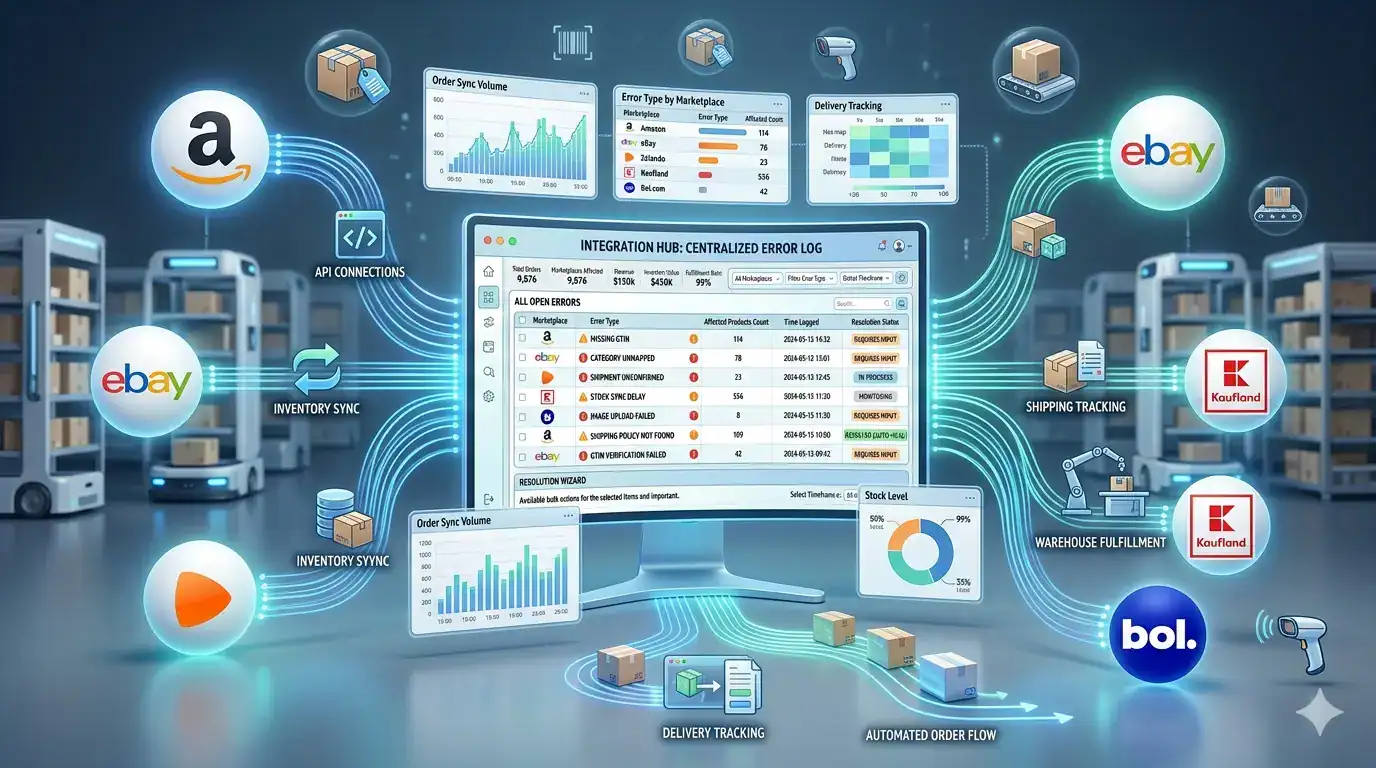

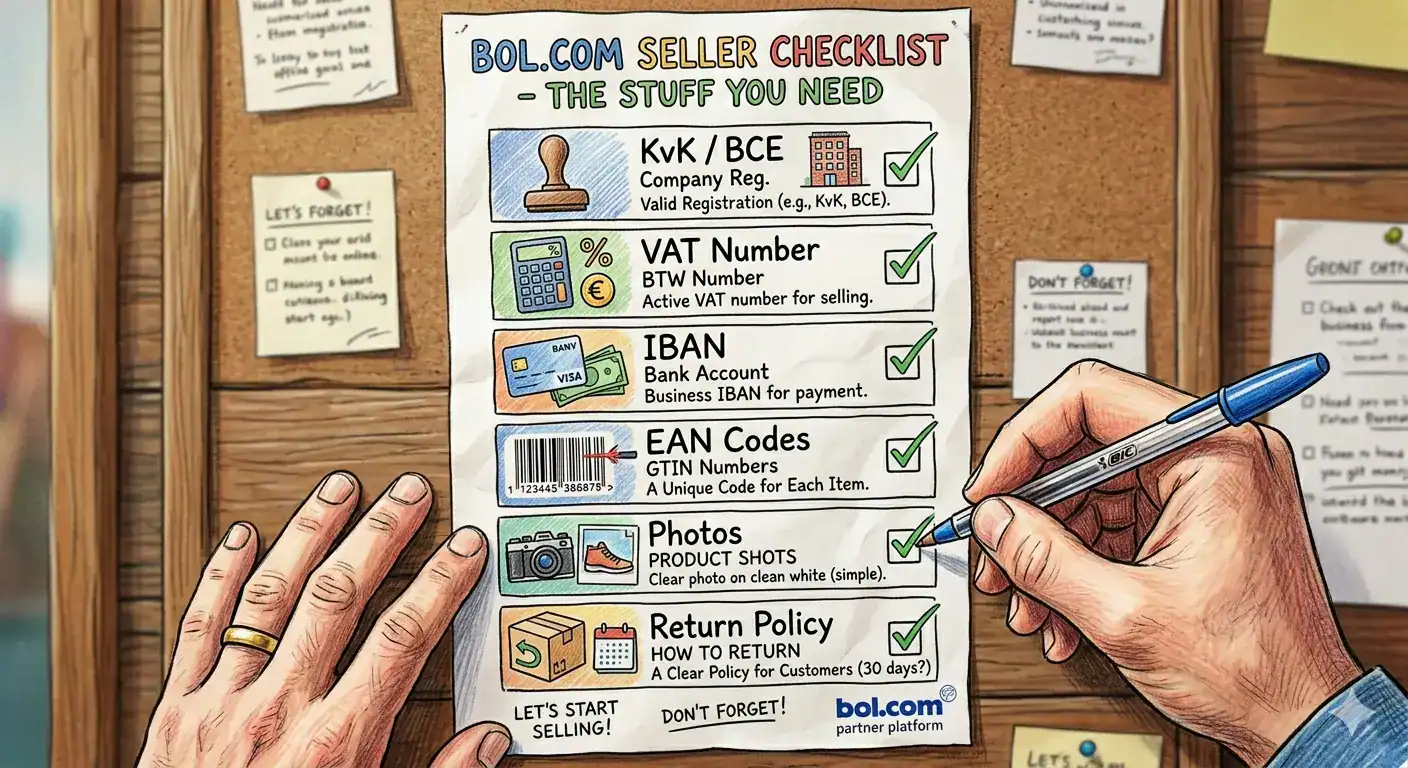
| TL;DR bol.com is the largest marketplace in the Netherlands and Belgium, with over 13 million active customers. To sell on bol.com, you need a Dutch or Belgian business registration, a VAT number, and an EAN code for every product. Winning the bol.com Buy Box comes down to price, delivery speed, and seller rating – all three matter equally. Connecting your Shopify or WooCommerce store via an API integration lets you manage listings, inventory, and orders without manual work. Most new bol.com sellers make their first sale within 2 to 4 weeks of going live. |
bol.com processes more than 13 million orders per year and reaches over 13 million active customers across the Netherlands and Belgium. For any Dutch or Belgian online store looking to grow beyond its own webshop, it is the single most important marketplace to be on. The platform generated approximately EUR 5.3 billion in gross merchandise value in 2023, and third-party sellers now account for more than half of all sales.
Getting started on bol.com is straightforward if you know what the platform requires. This guide walks you through every step – from account registration and product requirements to the Buy Box, returns, and connecting your existing store.
Continue reading -> Continue reading →