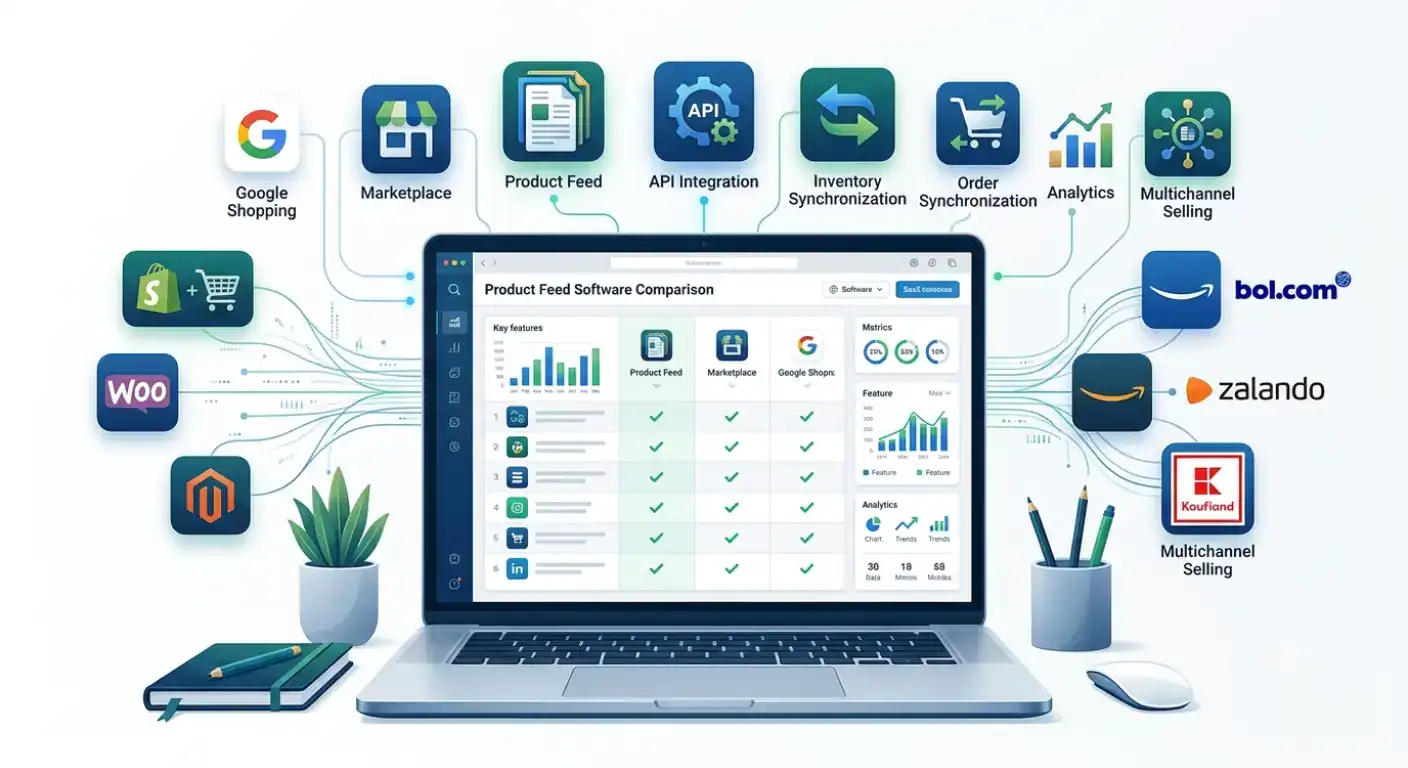
This comparison is based on publicly available product information, pricing pages, and user reviews as of mid-2026. Prices and features change. Verify with each vendor before purchasing.
If you run more than two advertising channels or list on any marketplace, you almost certainly need product feed software. Without it, you are manually reformatting the same product data for Google Merchant Center, Meta Commerce Manager, Idealo, and every marketplace where you sell, which is both time-consuming and error-prone.
Product feed software eliminates that work. It connects to your store, applies transformation rules to match each channel’s requirements, and distributes your catalog automatically on a schedule. The question is which tool fits your specific combination of channels, store platform, team size, and budget.
This guide compares six tools across the features that actually matter for the decision: channel coverage, marketplace depth, pricing structure, ease of setup, and who each tool is genuinely best for.
(more…) Continue reading →
There’s exciting news from Kaufland Global Marketplace: The Kaufland marketplace is expanding to Spain and the Netherlands later this summer. We’ve already laid the groundwork for you so you can quickly and easily tap into new markets!
Kaufland Global Marketplace offers you the largest marketplace network from Europe!
Register now and start selling across Europe with a single registration!
(more…) Continue reading →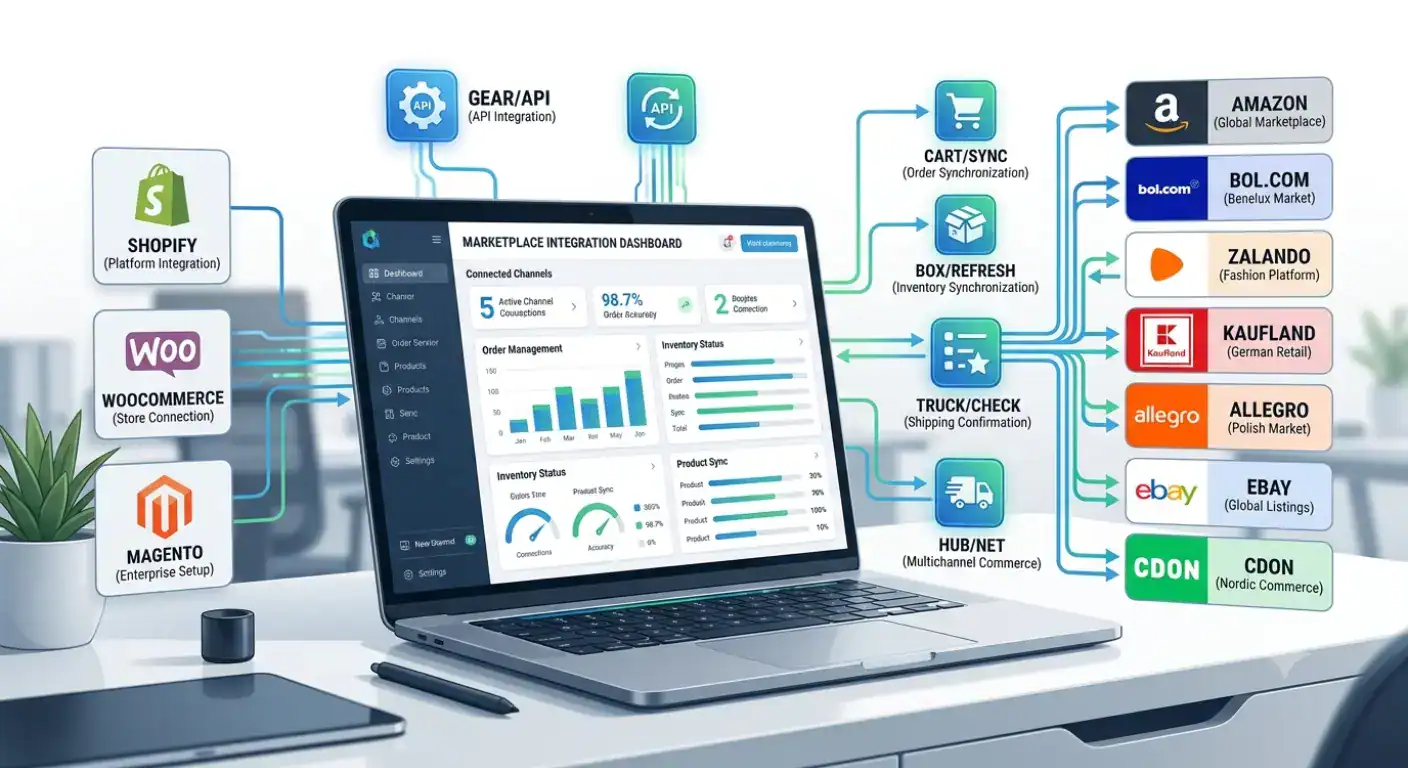
This comparison is based on publicly available product information, pricing pages, and verified user reviews as of mid-2026. Prices and feature sets change. Verify with each vendor before purchasing.
There are two distinct categories of multichannel software that often get confused: product feed software and marketplace integration software. They solve different problems.
Product feed software distributes your product catalog to advertising and comparison channels (Google Shopping, Meta Ads, Idealo, Beslist) in the right format for each channel. The data flow is one direction: from your store to the channel. Marketplace integration software creates a two-way API connection with marketplaces like Amazon, bol.com, and Zalando. It sends your product listings to the marketplace and pulls back orders and inventory updates automatically. Without this second layer, you are logging into each marketplace dashboard separately to see orders.
This guide focuses specifically on marketplace integration software: what it does, how the leading platforms compare across the features that matter for European merchants, and which tool fits which type of store.
| Key Takeaways Marketplace integration software is API-based and two-way: it handles both listing your products on marketplaces and importing orders and inventory updates back to your store. Not every tool in this comparison covers European marketplaces equally. bol.com, Zalando, Kaufland, Allegro, and Miinto are well-supported by Koongo and Channel Engine but minimally or not at all by US-centric platforms. Order synchronization is the feature that separates feed tools from true marketplace integration platforms: it imports marketplace orders into your Shopify or WooCommerce order workflow automatically.Inventory synchronization prevents overselling: when a unit sells on one channel, stock is updated across all others within minutes. For SMEs with under 5,000 SKUs and 2-5 marketplace targets, Koongo offers the lowest entry cost that includes all three capabilities: listing, order sync, and inventory sync. |

Comet, the British electricals name, is returning in 2026, this time as an online marketplace for tech and consumer electricals. If you sell electronics or appliances, it’s a channel worth getting ready for now, because sellers who join before launch will have their products live from day one.
Here’s what the new Comet is, why it’s a strong fit for tech and electricals sellers, the challenge of listing electronics on any marketplace, and how Koongo gets your catalogue ready ahead of launch.
(more…) Continue reading →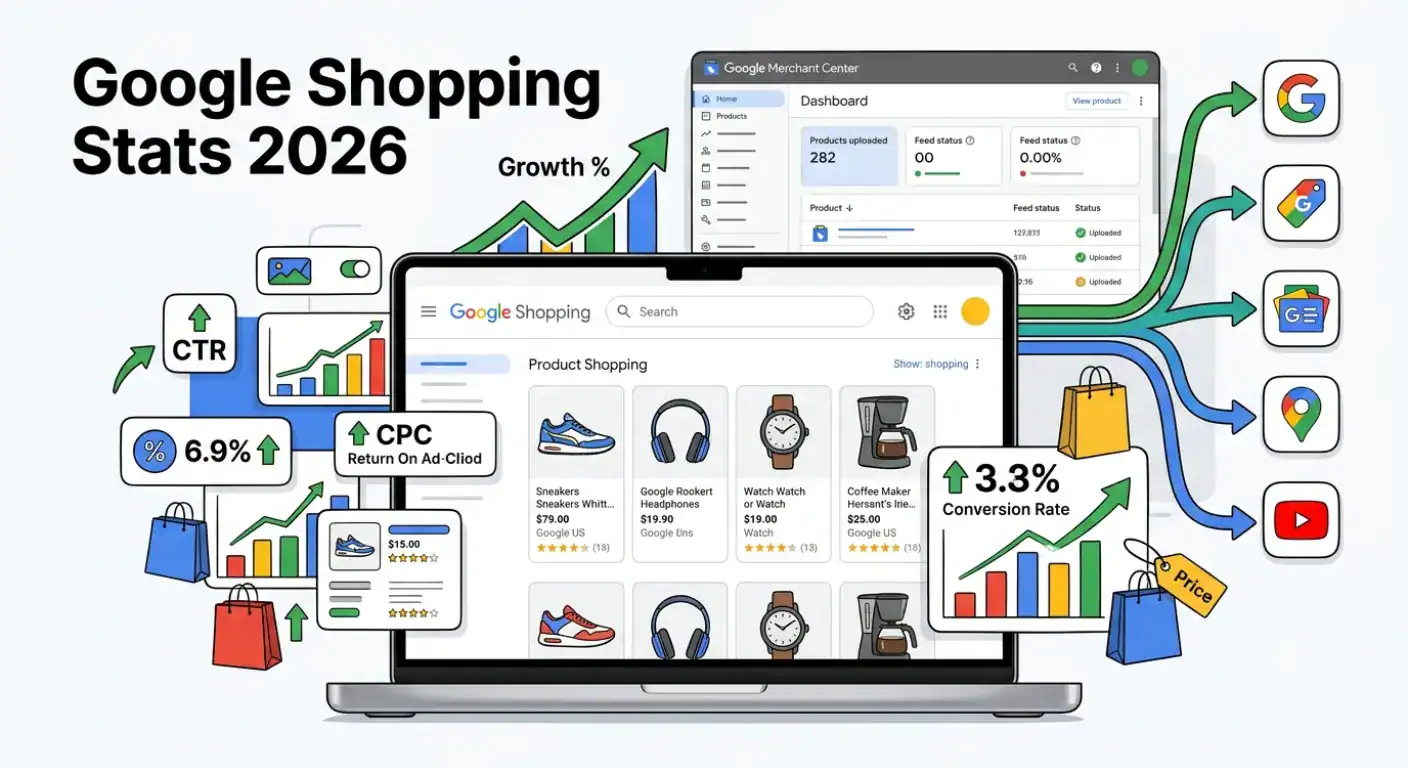
Statistics in this article are sourced from official Alphabet SEC filings, WordStream 2025-2026 Google Ads benchmarks, DemandSage Google Ads statistics, Triple Whale 2025 benchmarks report, OwlClaw Google Shopping benchmarks 2026, and additional verified industry sources. Data reflects the most recent available figures as of mid-2026.
| TL;DR Google Ads generated USD 294.68 billion in advertising revenue in 2025, a 10%+ increase year-on-year, with Q4 2025 alone generating USD 82.3 billion. Google Shopping Ads account for 76% of all retail search ad spend and 85% of all clicks on Google retail campaigns – making them the dominant format for ecommerce advertisers. Average Google Shopping CTR: 0.86%. Average Shopping CPC: USD 0.66 globally (EUR 0.36 in European Shopping campaigns). Average conversion rate: 1.91%.Performance Max now accounts for 34% of total Google Ads spend in 2026, with 93% of retail advertisers running PMax for Shopping campaigns. Google Merchant Center is free to use. Products approved in GMC can appear across Google Search, Shopping tab, Images, Maps, and YouTube. Feed quality is the primary ranking signal. |
Google Shopping is the largest paid channel for ecommerce advertising globally. For every euro or dollar spent on retail search advertising in 2025, approximately 76 cents went to Shopping formats – not text ads. Yet the gap between merchants who treat Google Shopping as a simple feed upload and those who actively optimise it is wider than in almost any other advertising channel.
This article compiles the most current available statistics on Google Shopping – its scale, cost trends, performance benchmarks, and the Google Merchant Center platform that underpins all of it – so you can understand where your campaigns stand relative to the market and what levers drive results.
(more…) Continue reading →