Dive into ‘Educational’: A hub of in-depth articles and resources offering expert insights, practical tips, and the latest strategies to help online sellers excel in the ever-evolving world of e-commerce.
Think about everyone who has logged into your Koongo account in the last twelve months.
The freelancer who fixed your Google Shopping feed in the spring. The agency that onboarded you to bol.com. The developer who touched your rules once and never came back. The colleague who left in June.
How many of them could still sign into your Koongo account right now?
If the answer is “I’d have to check,” you already know the problem. And if the answer is “all of them, we use the same password,” you’re in good company — it’s the most common way small ecommerce teams work, right up until the day it isn’t.
Global retail ecommerce sales are forecast to reach USD 6.88 trillion in 2026, representing 21.1% of total global retail.
European B2C ecommerce reached EUR 842 billion in 2024, growing 7% year-on-year, with the Netherlands, Germany, and France as the largest national markets after the UK.
Mobile commerce now accounts for approximately 60% of global ecommerce sales – smartphones generate 75-78% of traffic but still convert at roughly half the rate of desktop.
B2B ecommerce is 5-6x larger than B2C by total transaction value, with the global B2B market estimated at USD 32-36 trillion in 2025.
The ecommerce industry generates more data than almost any other sector – and most of it is contradictory, depending on how the source defines ecommerce (B2C only vs. B2B and C2C included; products only vs. services; retail only vs. all digital commerce). Understanding what the numbers actually measure matters before you use them for planning or comparison.
This article presents 80+ ecommerce statistics for 2026, clearly attributed to their source and scope. The figures are organised by theme: global market size, regional breakdown, growth trends, cross-border commerce, mobile, B2B, marketplace data, shopping behaviour, and future trends. Each section opens with the most frequently cited headline number, followed by the supporting data that provides context.
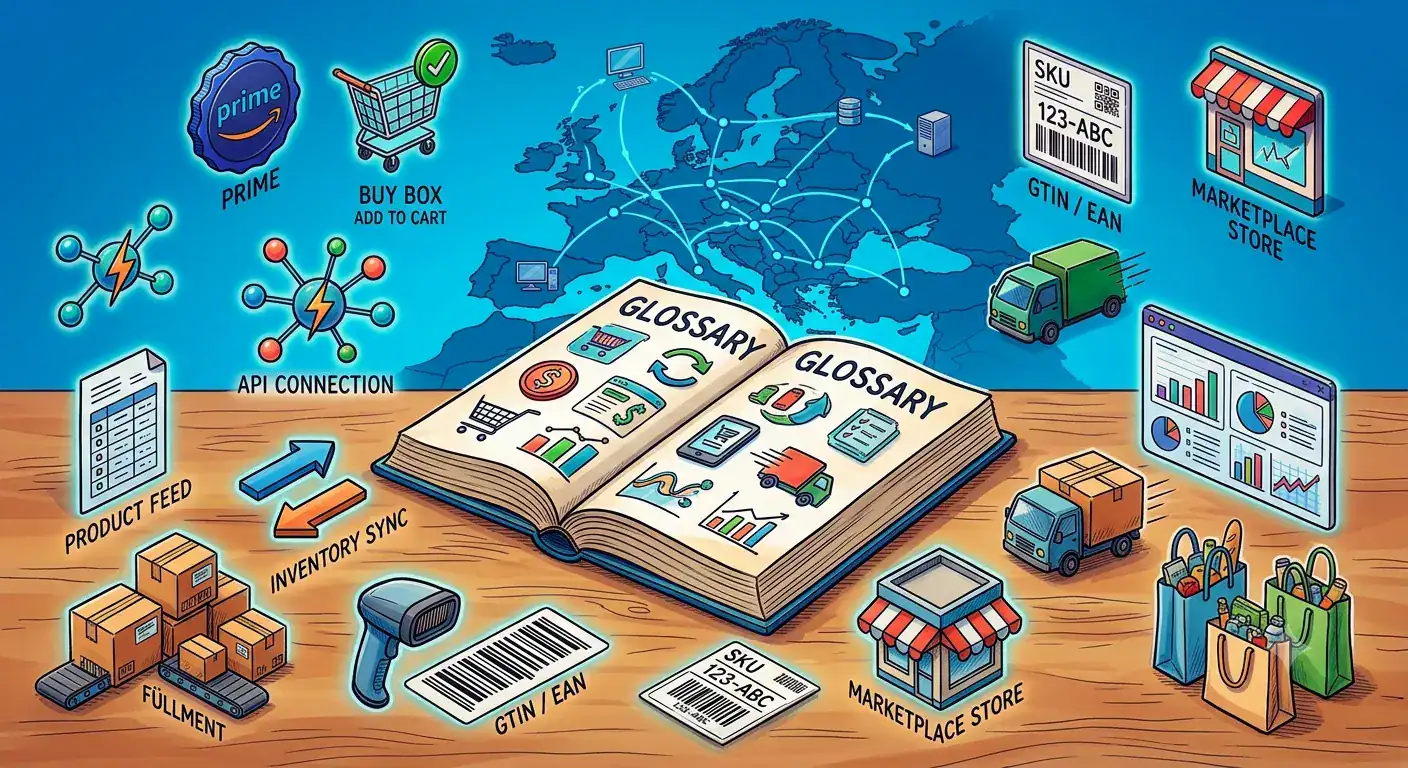
This glossary covers 50+ marketplace terms with definitions, examples, common mistakes, and best practices – built for merchants selling on Amazon, bol.com, Zalando, eBay, Kaufland, and Allegro.
Includes platform-specific terminology for each major European marketplace, plus a full A-Z of universal marketplace and integration terms.
Use the “Frequently Confused Marketplace Terms” section to quickly clarify common misunderstandings (FBA vs FBM, ASIN vs SKU, etc.).
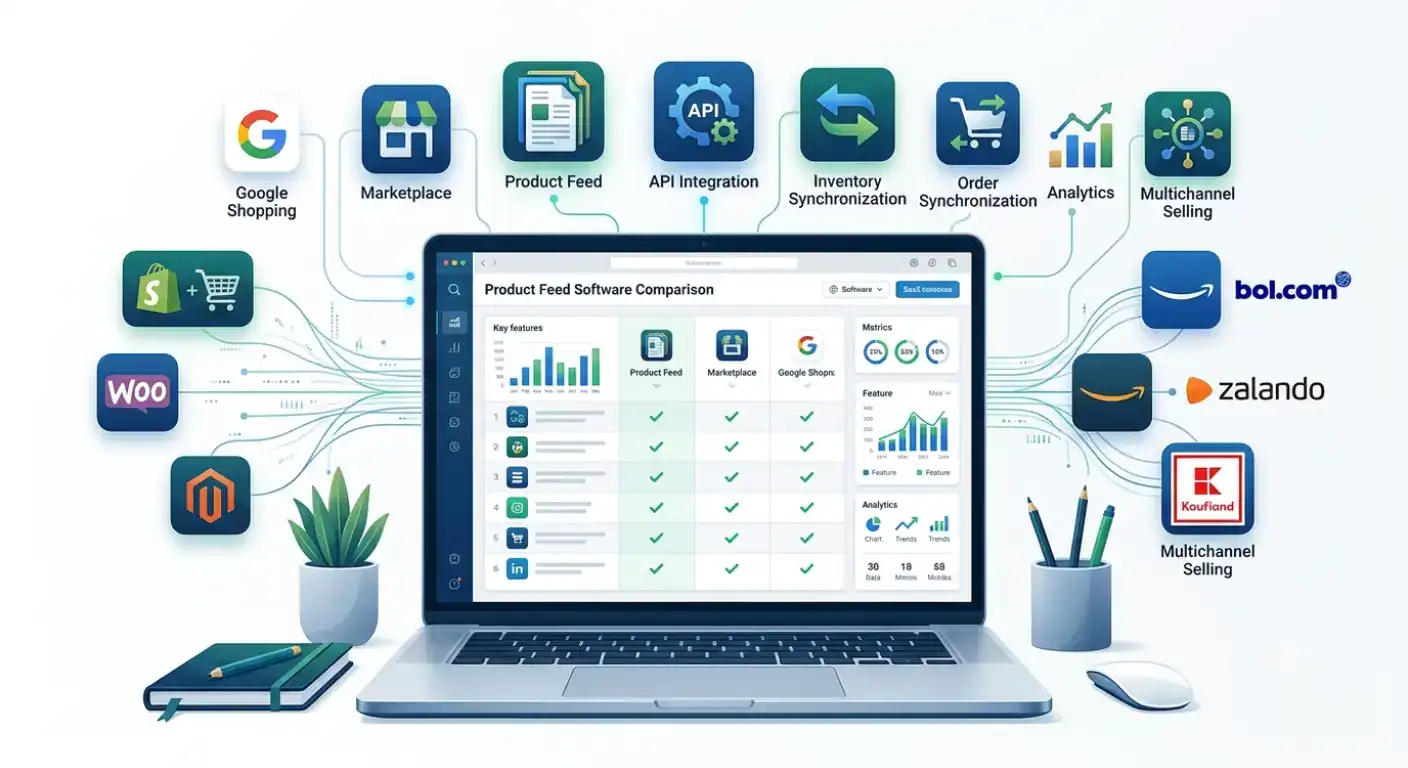
This comparison is based on publicly available product information, pricing pages, and user reviews as of mid-2026. Prices and features change. Verify with each vendor before purchasing.
Product feed software eliminates that work. It connects to your store, applies transformation rules to match each channel’s requirements, and distributes your catalog automatically on a schedule. The question is which tool fits your specific combination of channels, store platform, team size, and budget.
This guide compares six tools across the features that actually matter for the decision: channel coverage, marketplace depth, pricing structure, ease of setup, and who each tool is genuinely best for.
This comparison is based on publicly available product information, pricing pages, and verified user reviews as of mid-2026. Prices and feature sets change. Verify with each vendor before purchasing.
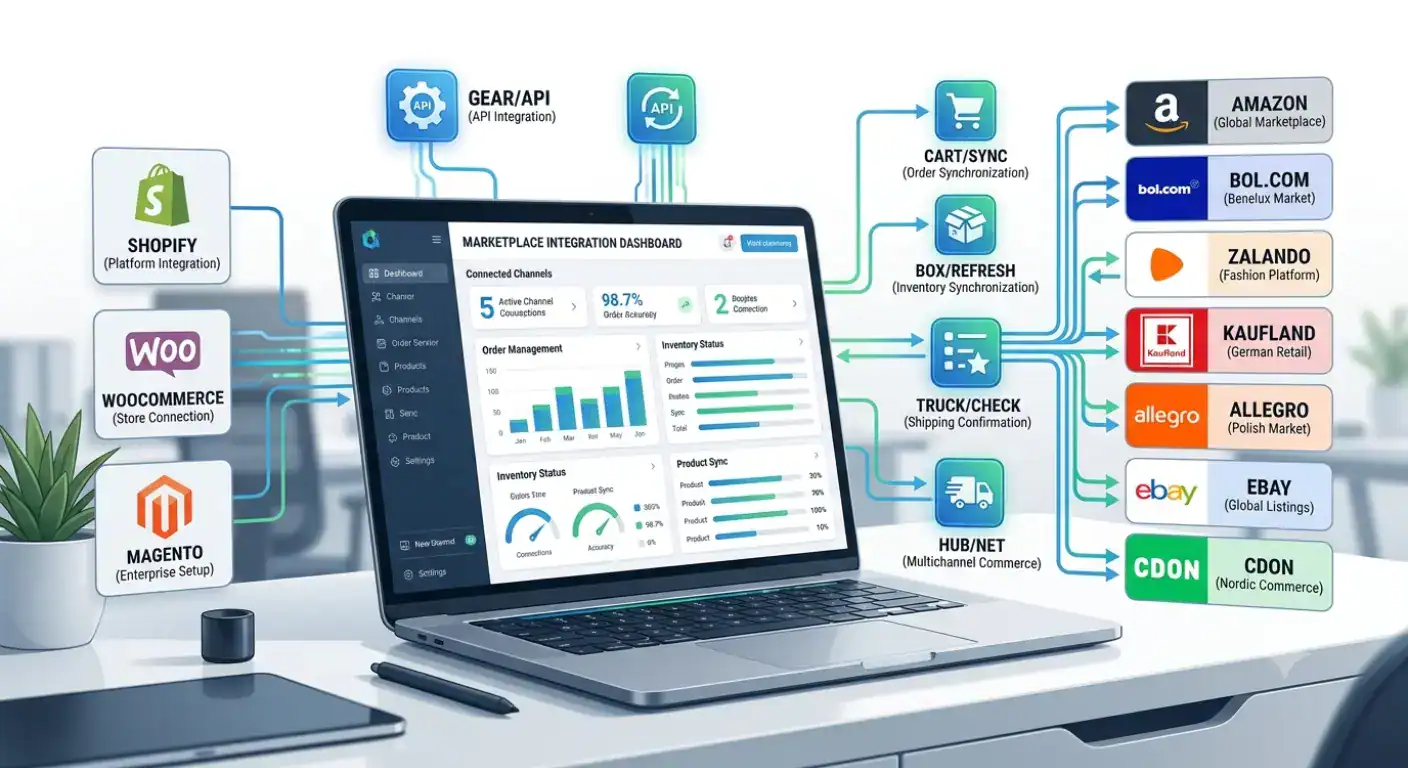
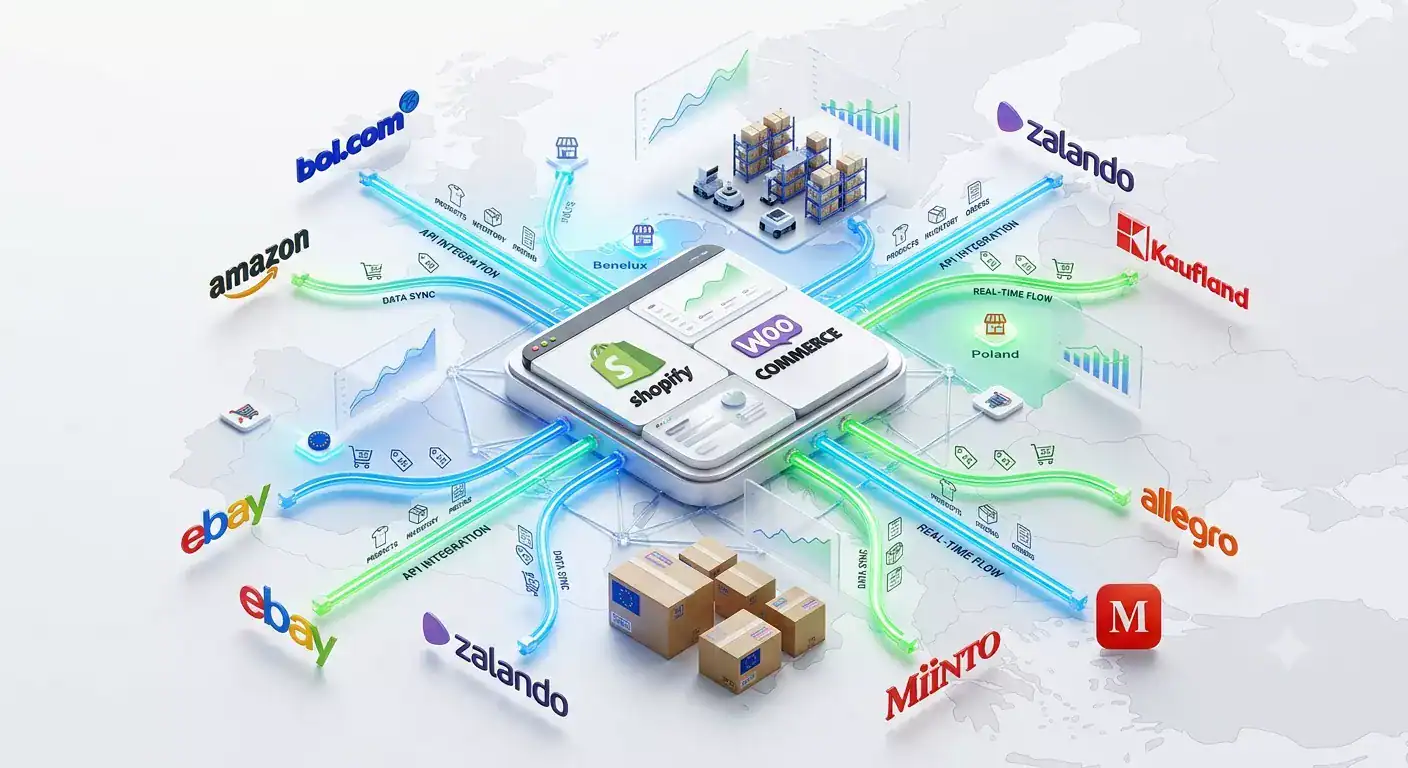
This guide focuses specifically on marketplace integration software: what it does, how the leading platforms compare across the features that matter for European merchants, and which tool fits which type of store.
Order synchronization is the feature that separates feed tools from true marketplace integration platforms: it imports marketplace orders into your Shopify or WooCommerce order workflow automatically.Inventory synchronization prevents overselling: when a unit sells on one channel, stock is updated across all others within minutes.
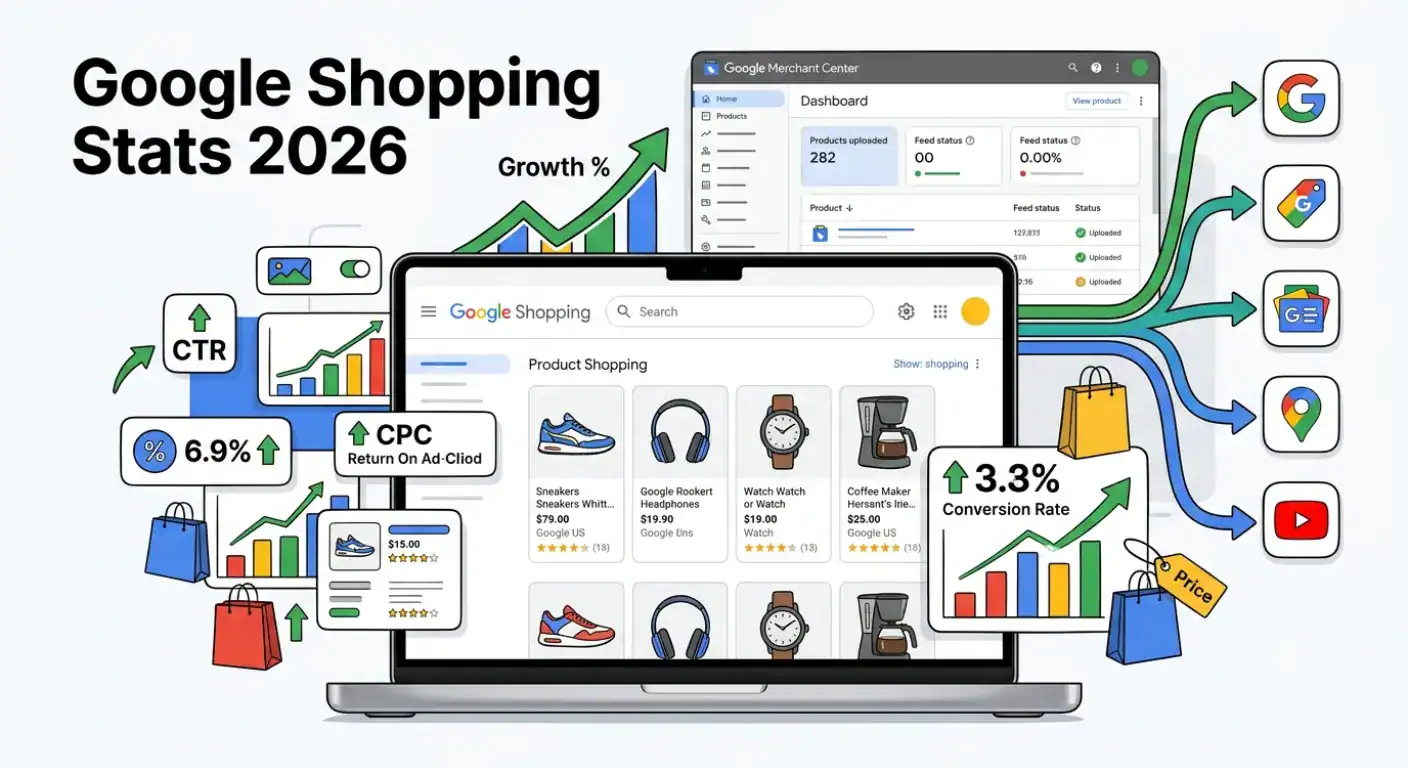
Google Ads generated USD 294.68 billion in advertising revenue in 2025, a 10%+ increase year-on-year, with Q4 2025 alone generating USD 82.3 billion.
Google Shopping Ads account for 76% of all retail search ad spend and 85% of all clicks on Google retail campaigns – making them the dominant format for ecommerce advertisers.
Average Google Shopping CTR: 0.86%. Average Shopping CPC: USD 0.66 globally (EUR 0.36 in European Shopping campaigns).
Average conversion rate: 1.91%.Performance Max now accounts for 34% of total Google Ads spend in 2026, with 93% of retail advertisers running PMax for Shopping campaigns.
Google Merchant Center is free to use. Products approved in GMC can appear across Google Search, Shopping tab, Images, Maps, and YouTube. Feed quality is the primary ranking signal.
Google Shopping is the largest paid channel for ecommerce advertising globally. For every euro or dollar spent on retail search advertising in 2025, approximately 76 cents went to Shopping formats – not text ads. Yet the gap between merchants who treat Google Shopping as a simple feed upload and those who actively optimise it is wider than in almost any other advertising channel.
This article compiles the most current available statistics on Google Shopping – its scale, cost trends, performance benchmarks, and the Google Merchant Center platform that underpins all of it – so you can understand where your campaigns stand relative to the market and what levers drive results.
In 2024, more than 60% of all online product searches in Europe started on a marketplace rather than a search engine. Amazon, bol.com, Zalando, and their peers have become the default product discovery layer for hundreds of millions of shoppers and for merchants, this creates both an opportunity and a strategic challenge.
The opportunity: instant access to an audience that would take years and significant ad spend to build on your own webshop. The challenge: each marketplace operates differently, charges differently, and requires your product data in a different format. Running three or four channels manually adds hours of work every week and introduces errors that cost you visibility, sales, and occasionally your seller account.
This guide covers everything you need to know about marketplace selling in 2026 from what a marketplace is and which ones matter for European merchants, through to how multichannel operations work at scale and what mistakes to avoid in your first 90 days.
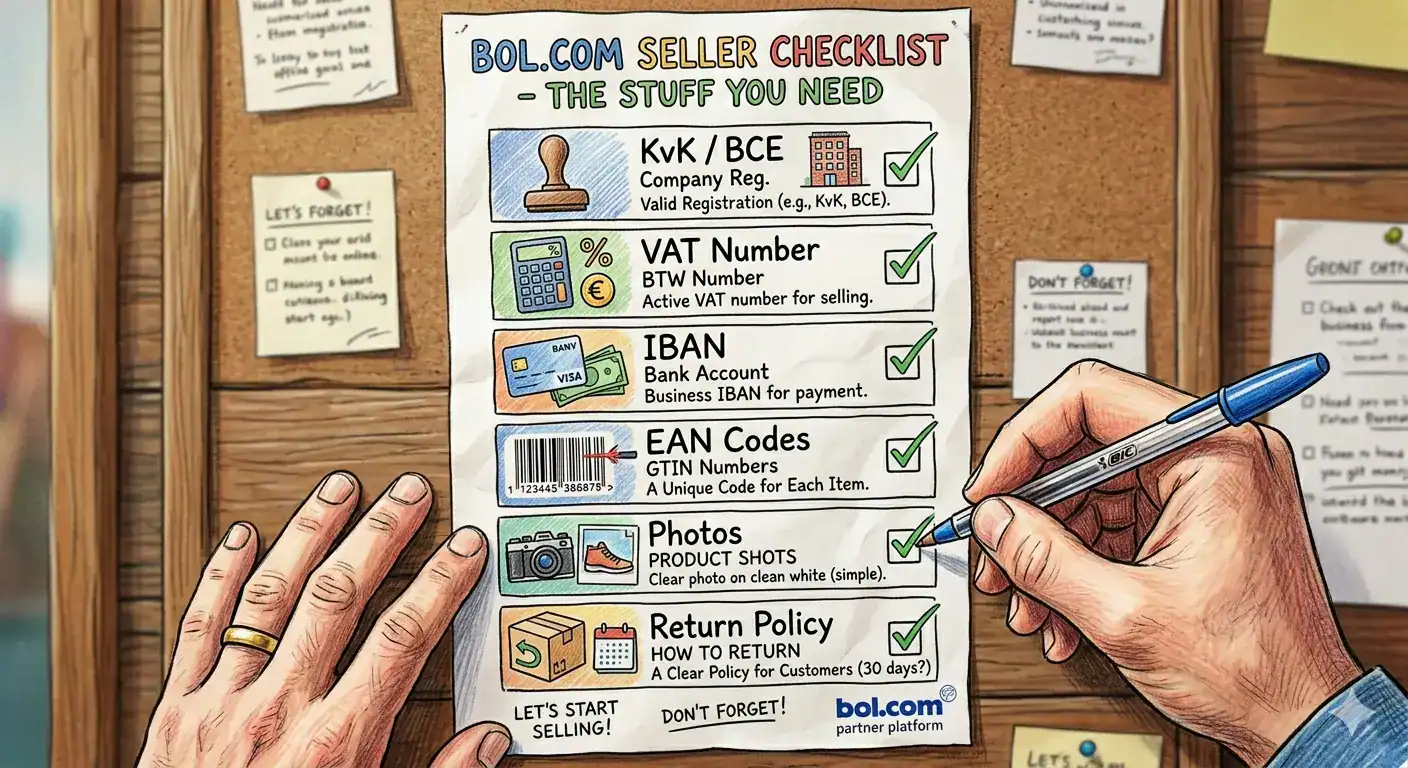
TL;DR bol.com is the largest marketplace in the Netherlands and Belgium, with over 13 million active customers. To sell on bol.com, you need a Dutch or Belgian business registration, a VAT number, and an EAN code for every product. Winning the bol.com Buy Box comes down to price, delivery speed, and seller rating – all three matter equally. Connecting your Shopify or WooCommerce store via an API integration lets you manage listings, inventory, and orders without manual work. Most new bol.com sellers make their first sale within 2 to 4 weeks of going live.
bol.com processes more than 13 million orders per year and reaches over 13 million active customers across the Netherlands and Belgium. For any Dutch or Belgian online store looking to grow beyond its own webshop, it is the single most important marketplace to be on. The platform generated approximately EUR 5.3 billion in gross merchandise value in 2023, and third-party sellers now account for more than half of all sales.
Getting started on bol.com is straightforward if you know what the platform requires. This guide walks you through every step – from account registration and product requirements to the Buy Box, returns, and connecting your existing store.
TL;DR • Shopify’s built-in export tools generate basic product data files – not channel-ready feeds. Every major marketplace will reject a raw Shopify export without transformation.
• Connecting Shopify to marketplaces like bol.com, Amazon, and Zalando requires API-based integration, not just a product file upload.
• Order sync brings marketplace orders directly into your Shopify dashboard – so your team processes all orders in one place, regardless of which channel they came from.
• Your product feed must contain correctly formatted GTINs, channel-specific titles, accurate pricing, and real-time stock levels. Missing any of these causes disapprovals or overselling.
• The recommended setup sequence is: feed management first, then marketplace integration, then order and inventory automation – one channel at a time.
Shopify is one of the most popular e-commerce platforms in the Netherlands, Belgium, and across Europe – and for good reason. It is fast to set up, reliable to run, and straightforward to manage. But Shopify was built to run your own webshop. Selling on bol.com, Amazon, Zalando, or Google Shopping from the same backend requires a layer of infrastructure that Shopify does not include out of the box.
This guide explains exactly what Shopify can and cannot do natively for multichannel selling, how to connect your Shopify store to the marketplaces that matter for your market, and what the full setup looks like from first product feed to automated order management.
Google Shopping drives over 85% of all retail paid search clicks in most European markets. For online merchants selling physical products, it is typically the highest-volume paid acquisition channel available and the quality of your product feed determines how much of that traffic you actually reach.
This guide covers everything you need to set up a Google Shopping feed from a WooCommerce or Shopify store: what a feed is, which attributes Google requires, how to get your feed into Google Merchant Center, what errors to fix, and how to keep your feed performing over time. If you are setting this up for the first time, work through the sections in order. If you are troubleshooting an existing feed, jump to the error reference table.
Koongo uses cookies to improve your experience. By clicking “Accept”, you consent to the use of ALL the cookies. However, you may visit Cookie Settings to provide controlled consent. Cookie settingsACCEPT
Cookies
Privacy Overview
Koongo uses cookies to improve your experience while you navigate through the website. These cookies will be stored in your browser only with your consent. Learn more
Necessary cookies are absolutely essential for the website to function properly. This category only includes cookies that ensure the basic functionalities and security features of the website. These cookies do not store any personal information.
Cookie
Type
Duration
Description
_GRECAPTCHA
1
5 months 27 days
This cookie is set by Google. In addition to certain standard Google cookies, reCAPTCHA sets a necessary cookie (_GRECAPTCHA) when executed for the purpose of providing its risk analysis.
cookielawinfo-checkbox-advertisement
1
1 year
The cookie is set by GDPR cookie consent to record the user consent for the cookies in the category "Advertisement".
cookielawinfo-checkbox-analytics
1
1 year
This cookies is set by GDPR Cookie Consent WordPress Plugin. The cookie is used to remember the user consent for the cookies under the category "Analytics".
cookielawinfo-checkbox-live-chat
1
1 year
No description
cookielawinfo-checkbox-necessary
0
11 months
This cookie is set by GDPR Cookie Consent plugin. The cookies is used to store the user consent for the cookies in the category "Necessary".
cookielawinfo-checkbox-non-necessary
0
11 months
This cookie is set by GDPR Cookie Consent plugin. The cookies is used to store the user consent for the cookies in the category "Non Necessary".
cookielawinfo-checkbox-performance
1
1 year
This cookie is set by GDPR Cookie Consent plugin. The cookie is used to store the user consent for the cookies in the category "Performance".
gr
1
90 days
This cookie is used by Reditus Affiliate system. Reditus does not build a tracking profile - learn more.
intercom-device-id-tctfy2ty
persistent
9 months
First party cookie is set by Intercom for Messenger. Used to identify the device interacting with the Messenger in order to improve security.
intercom-id-tctfy2ty
persistent
9 months
First party cookie is set by Intercom for Messenger. Anonymous visitor identifier cookie. Allows visitors to see any conversations they've had on Koongo websites.
intercom-session-tctfy2ty
session
7 days
First party cookie is set by Intercom for Messenger. Allows users to access their conversations and have data communicated on logged out pages for 1 week. Identifier for each unique browser session. This session cookie is refreshed on each successful logged-in ping, extending it one week from that moment.
language
0
1 week
Cookie for the language selector on the website.
viewed_cookie_policy
0
11 months
The cookie is set by the GDPR Cookie Consent plugin and is used to store whether or not user has consented to the use of cookies. It does not store any personal data.
We use these cookies to allow live-chat on the website.
Cookie
Type
Duration
Description
__cfruid
1
session
This cookie is set by the provider Cloudflare. This cookie is used for load balancing and for identifying trusted web traffic.
AWSALBCORS
1
7 days
This cookie is used for load balancing services provded by Amazon inorder to optimize the user experience. Amazon has updated the ALB and CLB so that customers can continue to use the CORS request with stickness.
Analytical cookies are used to understand how visitors interact with the website. These cookies help provide information on metrics the number of visitors, bounce rate, traffic source, etc.
Cookie
Type
Duration
Description
_ga
0
2 years
This cookie is installed by Google Analytics. The cookie is used to calculate visitor, session, camapign data and keep track of site usage for the site's analytics report. The cookies store information anonymously and assigns a randoly generated number to identify unique visitors.
_gid
0
1 day
This cookie is installed by Google Analytics. The cookie is used to store information of how visitors use a website and helps in creating an analytics report of how the wbsite is doing. The data collected including the number visitors, the source where they have come from, and the pages viisted in an anonymous form.
_uv_id
session
2 years
The cookie is set by Google Analytics. The cookie is used to collects data on the user’s visits to the website, such as which pages have been read.
SL_C_23361dd035530_SID
0
2 years
This cookie is installed by Smartlook. The cookie contains the project key, session ID, and visitor ID. Session and visitor IDs are unique identifiers assigned to new sessions and visitors.
UIDR
0
1 year
This cookie is set bu scorecardresearch.com. The cookie is used to tracks the users activity across the internet on the browser such as visit timestamp, IP address, and most recently visited webpages. and may the data send to 3rd party for analysis and reporting to help their clients better understand user preferences.
Performance cookies are used to understand and analyze the key performance indexes of the website which helps in delivering a better user experience for the visitors.
Cookie
Type
Duration
Description
_gat
0
1 minute
This cookies is installed by Google Universal Analytics to throttle the request rate to limit the colllection of data on high traffic sites.
Advertisement cookies are used to provide visitors with relevant ads and marketing campaigns. These cookies track visitors across websites and collect information to provide customized ads.
Cookie
Type
Duration
Description
__oaiq_consent
persistent
1 year
Set by the OpenAI Ads Pixel (ChatGPT Ads). Stores the visitor's measurement consent state for the pixel.
__obref
persistent
1 year
Set by the OpenAI Ads Pixel (ChatGPT Ads). Stores a random browser identifier used to measure conversions from ChatGPT ads.
__oppref
persistent
30 days
Set by the OpenAI Ads Pixel (ChatGPT Ads). Stores the ad click reference from the landing URL to attribute conversions to ChatGPT ads.
_gcl_au
persistent
3 months
Used by Google AdSense for experimenting with advertisement efficiency across websites using their services
IDE
persistent
1 year
This cookie is set by Doubleclick and carries out information about how the end user uses the website and any advertising that the end user may have seen before visiting the said website.
NID
1
6 months
This cookie is used to a profile based on user's interest and display personalized ads to the users.
test_cookie
session
11 months
The cookie is used to check if the user’s browser supports cookies.
uid
0
1 year
This cookie is used to measure the number and behavior of the visitors to the website anonymously. The data includes the number of visits, average duration of the visit on the website, pages visited, etc. for the purpose of better understanding user preferences for targeted advertisments.